
The Royal Mounds in Gamla Uppsala
The three Royal Mounds in Gamla Uppsala are impressive monuments from the Late Iron Age, built around the 6th century AD. Each mound measures between 230 and 260 feet in diameter and stands 50 feet tall, constructed with tens of thousands of cubic yards of soil. Building them required tremendous effort, estimated at 10,000 workdays per mound, with soil and sand transported using wooden tools. The mounds, which have long fascinated visitors, are located on a natural ridge, and removing the surrounding topsoil enhanced their visual prominence.
Today, they are known as the Western Mound, the Central Mound, and the Eastern Mound. In the 19th century, the Eastern and Western Mounds were excavated. The Eastern Mound contained cremated bones and a clay urn, while the Western Mound revealed bone fragments, jewelry, comb fragments, and melted glass goblets. Although the findings were limited, they indicate that the buried individuals were of high status.
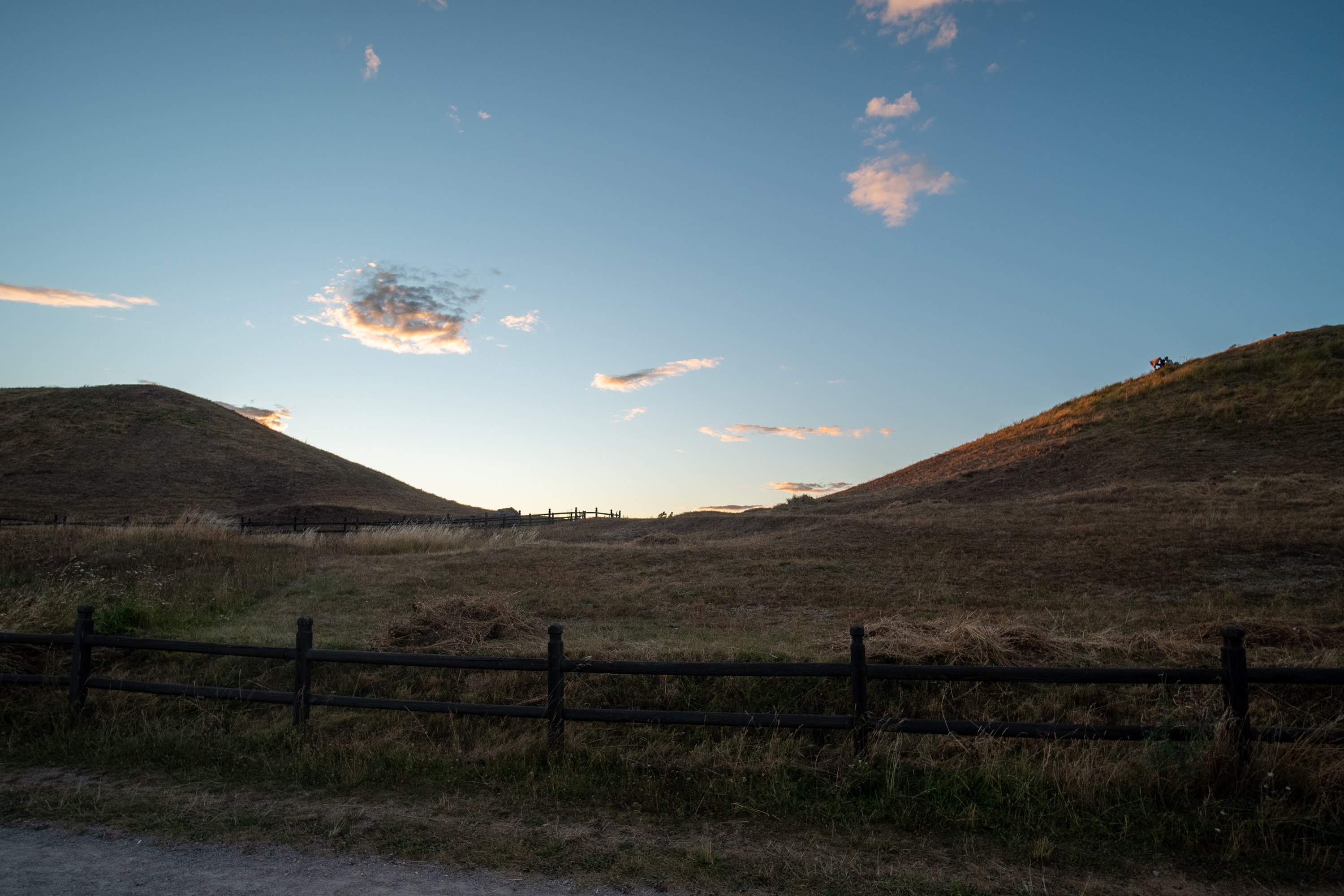
A fourth mound, the Northern Mound, was discovered in 2015. It measured 108 feet in diameter and was built in the 7th century. The Northern Mound was partially destroyed in the 12th century to make room for a cathedral. Today, its location can still be discerned on a remaining plateau. To protect the Royal Mounds from wear and tear, they are fenced off, and visitors are encouraged to avoid walking on existing paths.
At the Gamla Uppsala Museum, visitors can see reconstructions of the findings and learn more about the mounds and their historical significance.