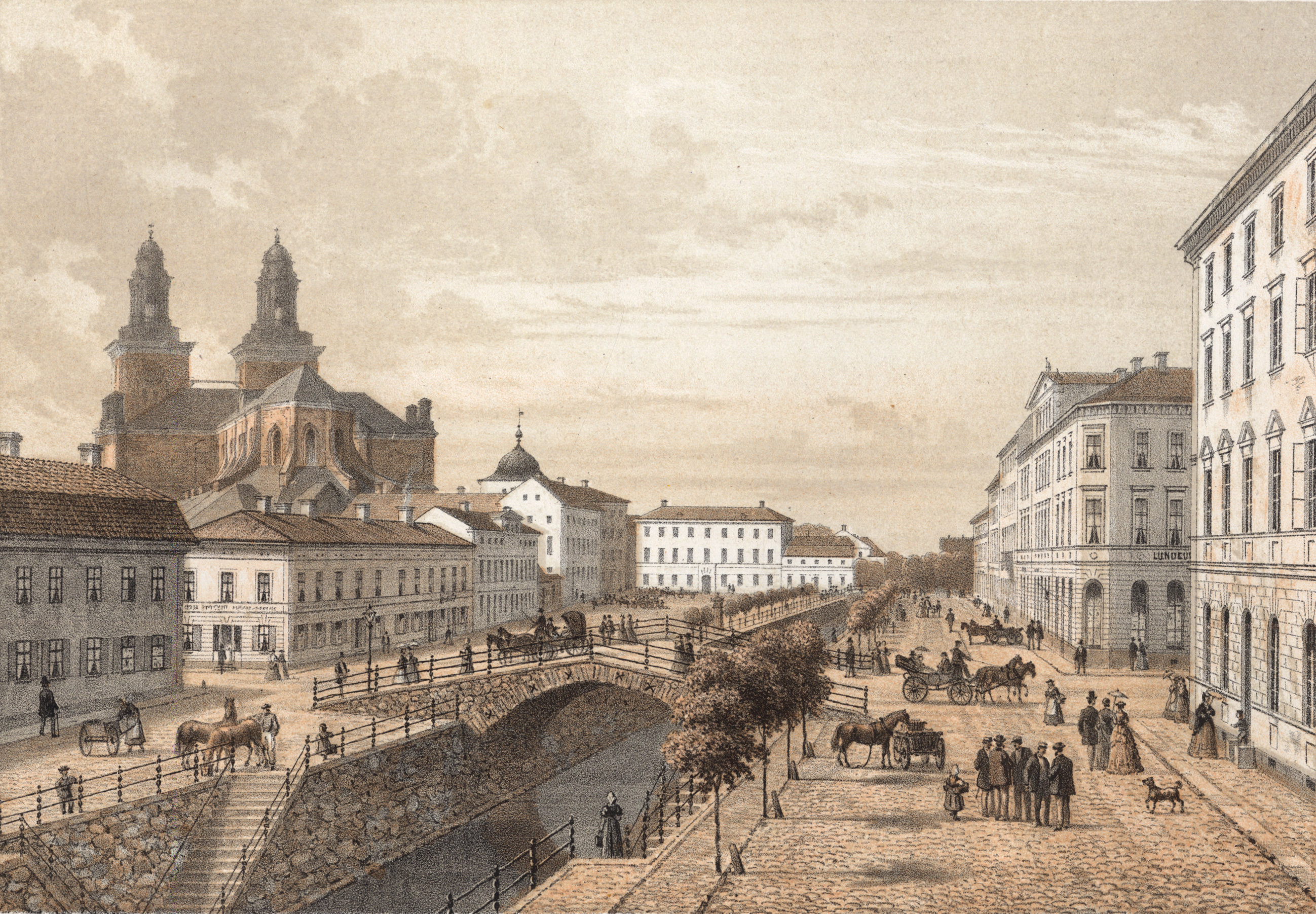
Uppsala in the 19th century - a city in transformation
The university was undoubtedly the city's heart and engine. The first half of the century was permeated by national romanticism, where the image of the cheerful, singing student took root. The poet Gunnar Wennerberg's "Gluntarne" captured the spirit of the times and student life, which increasingly occupied a prominent place in the cityscape. The Uppsala Student Union was formed in 1849, institutionalizing the students' influence. This period also saw the construction of some of the city's most iconic buildings. The new university library, Carolina Rediviva, was completed in 1841 and became a central hub for learning. Towards the end of the century, in 1887, the magnificent University Hall was inaugurated, a symbol of the status of the university and science.
Scientifically, the 19th century was a period of great progress in Uppsala. New professorships were established, and research played an increasingly prominent role. A milestone in the history of equality was reached in 1872 when Betty Pettersson became the first woman to enroll as a student at the university. Ten years later, in 1883, Ellen Fries was awarded a doctorate, becoming Sweden's first female PhD. These events testify to a gradual modernization of the academic world, although the road to full equality was long.
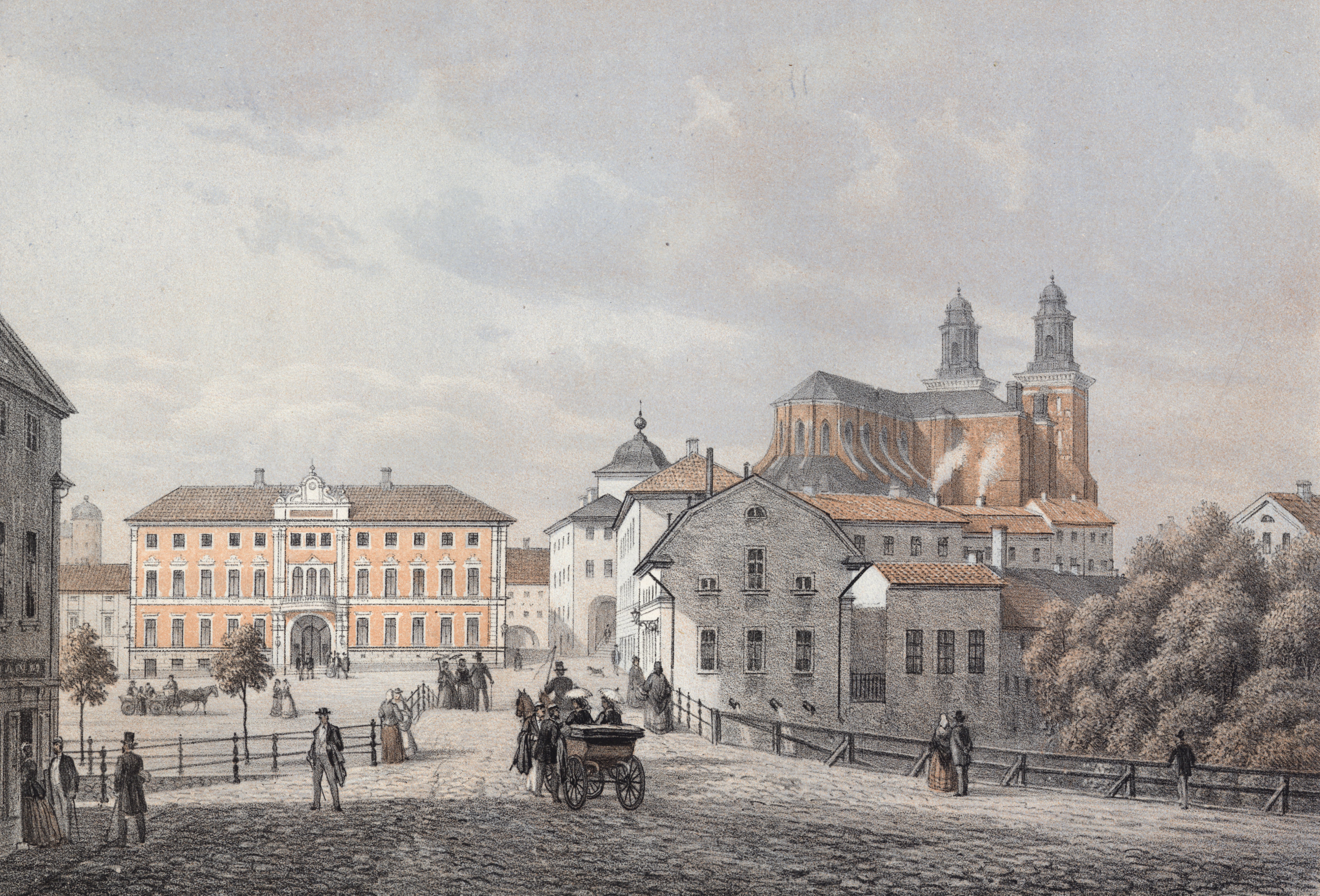
While academic life flourished, Uppsala took its first tentative steps into the industrial age. One of the most decisive events for the city's development was the arrival of the railway. Uppsala Central Station was inaugurated in 1866 by King Karl XV, connecting the city with Stockholm and the rest of the country in an entirely new way. The journey to the capital, previously a full-day project, was now shortened to a couple of hours. This facilitated not only passenger transport but also the freight of goods, benefiting trade and industry. The city center also underwent a transformation. Stone houses began to replace the old wooden ones, and new streets and squares were laid out. The University Hospital, which came into use in 1867, was another example of modern development and an investment in public health.
This changing urban environment was captured in a unique way by the draftsman and lithographer Alexander Nay (1822-1883). Through his collection of prints, "Upsala i taflor" (Uppsala in Pictures), first published in 1870 with text by Simon Nordström, he provided posterity with invaluable visual documentation of 19th-century Uppsala. Nay's detailed lithographs depicted the city's most famous views, from the Cathedral and Castle Hill to the lively scenes around the riverbanks and the Nybron bridge. His images not only show the new monumental buildings but also convey a sense of city life and the atmosphere during this period of upheaval, thus serving as an important complement to written sources.
But 19th-century Uppsala also had a darker side, which contrasted sharply with the academic idyll. The consumption of *brännvin* (a type of spirit) was widespread and a significant source of income, so much so that the revenue from the liquor tax helped finance the city's industrialization. With high alcohol consumption came social problems, and prostitution was a tangible feature of the cityscape. For a period, there was a system with a "Besiktningsbyrå" (Inspection Bureau) where prostitutes were registered and monitored, offering insight into the era's views on and handling of social issues. Certain streets, like Repslagargatan, became known as the city's "red-light district."
Towards the end of the century, new ideas and political currents also began to take hold among the students. The liberal student association Verdandi, founded in 1882, became a platform for radical discussions on topics such as morality, challenging the prevailing conservative norms. The founding of the newspaper Upsala Nya Tidning in 1890 was another sign of a new, more dynamic, and debate-driven public discourse.
In summary, the 19th century was a century of profound change for Uppsala. The city balanced between tradition and modernity, between academic ceremony and social misery. The monumental buildings that were erected, the arrival of the railway, and the scientific and social progress laid the foundation for the Uppsala we know today. It was during this century that Uppsala truly solidified its position not only as a historic city of learning but also as a city moving towards a new era.
The Vintage Uppsala Calendar features Alexander Nay's lithographies.