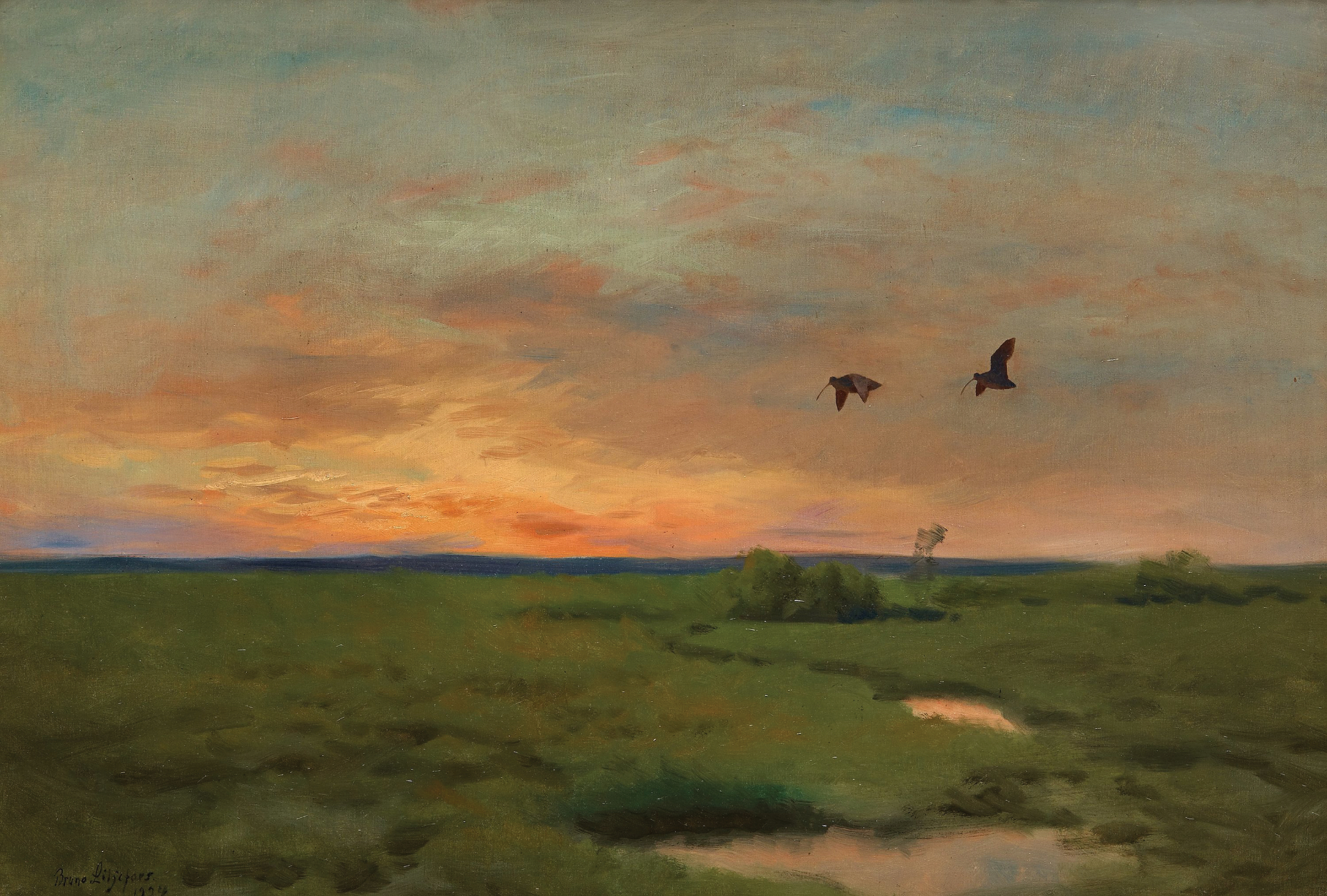
Bruno Liljefors - Pioneer of International Wildlife Art
When discussing the golden age of Swedish art, attention often turns to Carl Larsson's idyllic domestic scenes or Anders Zorn's virtuoso handling of light on water and in valleys. Bruno Liljefors (1860–1939) moved in the same circles, but his art took a different path. He did more than reshape Swedish landscape painting – he laid the foundations for an international genre that would later be known as wildlife art. By combining scientific observation with an Impressionist approach to paint, he shifted the subject away from the arranged props of the studio and out into the actual ecosystems of the wild.
From the Forests of Uppland to the Bleakness of the Archipelago
Liljefors was born in Uppsala in 1860. As a child he was frail and often ill, and was encouraged to spend time outdoors to build up his health. What began as a health cure in the forests and wetlands of Uppland grew, over time, into something else: a fascination with Scandinavian fauna and a lifelong interest in hunting and sport. He trained his body to the level of an elite athlete and became a skilled marksman with a practised eye for animal movement.
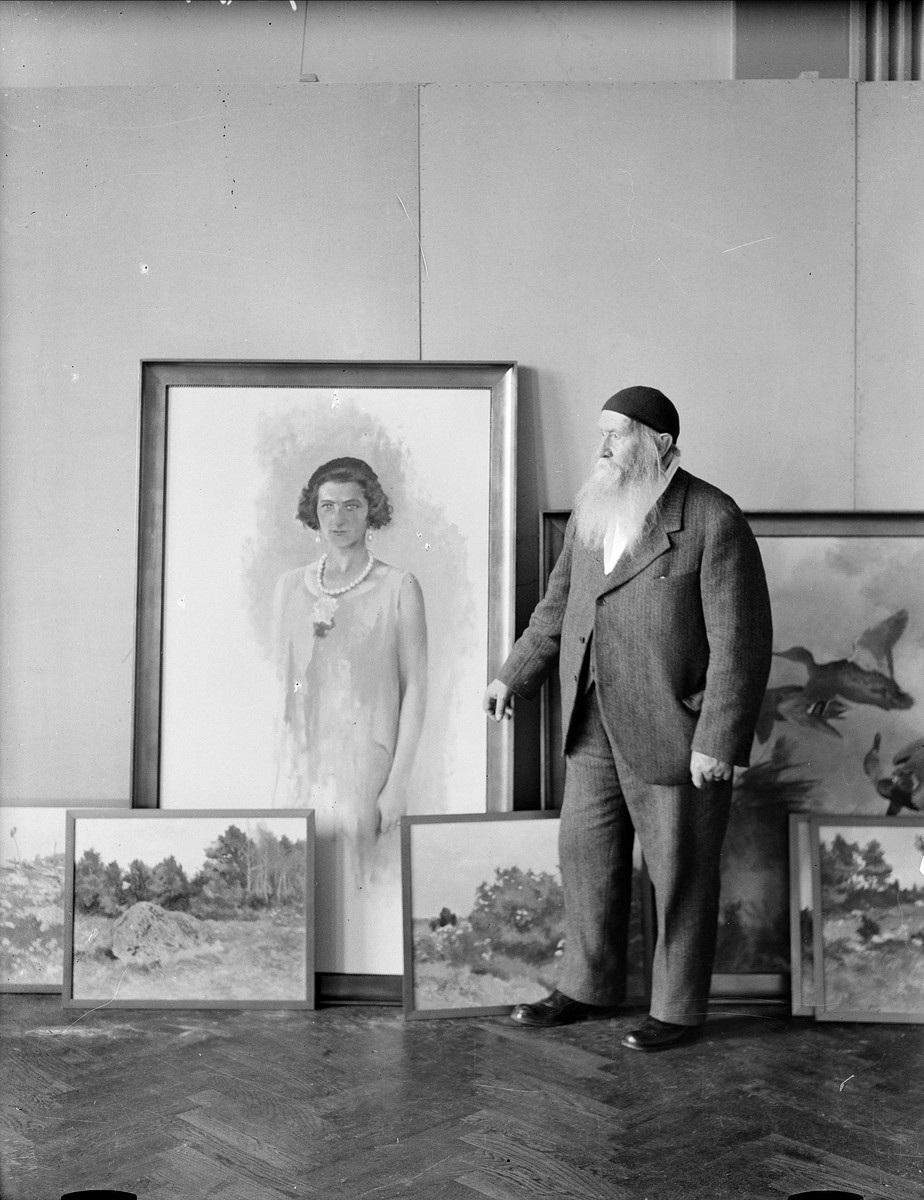
His experience as a hunter shaped his artistic method. While most European animal painters of the period worked from stuffed specimens, Liljefors studied animals alive, in motion, in their own habitats. He learned to read anatomy, muscle tension and body language – at rest, in flight, mid-hunt. That direct contact deepened further when he settled for periods in Österbybruk, and later in the Stockholm archipelago, where birds of prey and seabirds became his principal subjects.
Evolutionary Realism
Liljefors broke with the romantic nature painting of the nineteenth century, in which nature was cast either as idyll or as moral backdrop. He was strongly influenced by Darwin's theory of evolution, published during his youth. For him, animals were not symbols of human traits; they were parts of a wider context, shaped by their environment.
This shows most clearly in his depictions of predation. A pigeon struck down by a sparrowhawk. A fox stalking wild geese. No moralising, no sentimentality. The laws of nature are presented plainly: the eater and the eaten. The drama lies in the moment itself, not in any imposed emotion.
Camouflage is another recurring theme. In his depictions of hares and partridges amid melting snow or autumn vegetation, the animal all but merges with its surroundings. The viewer is forced to search the scene, hunter-like, just to find the subject at all. That demanded not only a grasp of animal anatomy but also command of plein-air technique – how light, shadow and atmosphere shift outdoors.
The World's Largest Collection, at Gustavianum
Liljefors's legacy is centred today in his home town of Uppsala. Through two private donations, Uppsala University holds the largest and most varied collection of his work anywhere in the world.
The first donation came in the 1970s, from the artist's son, Lindorm Liljefors, and his wife Marianne. It was substantially expanded more recently when his granddaughter, Catarina Lundegårdh, gave a further 70 works to the university's museum, Gustavianum – oil paintings, drawings and sculptures from across his life, including several family portraits of his wife, Signe Olofsson.
Gustavianum is currently showing an exhibition drawn from the collection, running until 19 September 2027. It hangs his well-known nature paintings alongside something less often seen: the rapid oil studies he made directly in the field.
Sources
- Svenskt Biografiskt Lexikon (SBL): Academic biographical data on Bruno Liljefors's life, upbringing and artistic circles.
- Nationalmuseum, Stockholm: Historical exhibition catalogues and analyses of nineteenth-century plein-air painting and the golden age of Swedish art.
- Uppsala University / Gustavianum: Official press releases and documentation regarding the donations from Lindorm Liljefors (1970s) and Catarina Lundegårdh (2025), and the 2026–2027 exhibition programme.